About Us
Splitgraphic is an international art initiative founded in Split, Croatia, in 2003, with the aim of promoting and developing contemporary printmaking in Croatia and beyond. Over more than two decades, through ten editions of the International Print Biennial and numerous solo and group exhibitions, Splitgraphic has brought together Croatian and international artists from different generations, artistic backgrounds and cultural traditions. This history of artistic activity and exchange now provides the foundation for Splitgraphic’s continued development, with a focus on researching, preserving and presenting its artistic and documentary heritage, alongside new exhibition programmes and international collaborations.
Since its inception, Splitgraphic has sought to showcase outstanding contemporary printmaking, support both traditional and experimental approaches to the medium, and encourage dialogue between different artistic practices and disciplines. Beyond fostering exchanges between artists and printmaking techniques, Splitgraphic has also sought to connect exhibition spaces across the city of Split. By staging exhibitions in galleries and cultural institutions throughout the city, it has effectively “occupied” these spaces with prints, establishing a dialogue within Split’s cultural landscape.
Exhibitions have been held at venues including the Old Town Hall, the Split City Museum, the Ethnographic Museum, the Conservation Department Gallery, the Emanuel Vidović Gallery, the Loggia Zlatnih vrata Gallery, Studio Naranča Gallery, the University Library Gallery in Split and Salon Galić.
2003
The first Splitgraphic Biennial took place in 2003 on the initiative of the artist Pavo Majić (1949–2026). Its theme was Diocletian’s Palace, chosen as a link to Split’s printmaking tradition and, in particular, to the celebrated book by British architect Robert Adam, Ruins of the Palace of the Emperor Diocletian at Spalatro in Dalmatia (London, 1764), illustrated with engravings based on drawings by Charles Louis Clérisseau. Japanese artist Masahiro Fukuda received the Robert Adam Award for his print Peristil.
 2005
The second Splitgraphic Biennial established dialogue as one of its central guiding principles, a theme that would continue to shape subsequent editions. A series of exhibitions explored encounters between artists of different generations, artistic styles and printmaking techniques. These included dialogues between Kristina Restović and Ivan Kožarić, Sandra Mateljan and Marko Pogačnik, and Nikola Skokandić and Janice Wong, as well as group exhibitions bringing together Italian and Japanese printmaking and Croatian and American photography.
2007–2011
The third Splitgraphic Biennial in 2007 centred on a dialogue between women’s artistic voices, with works by female printmakers accounting for approximately two-thirds of the group exhibition. The Young Artists Award was also established that year, with Petra Kriletić as its first recipient. Supporting and showcasing young, emerging artists remained one of the Biennial’s important objectives.
The fourth Splitgraphic Biennial in 2009 explored the dialogue and confrontation between different printmaking techniques, questioning the place of printmaking as a medium within contemporary artistic practice. Alongside the group exhibition, three solo exhibitions were organised, including a major retrospective of prints and drawings by Dušan Džamonja at the Old Town Hall.
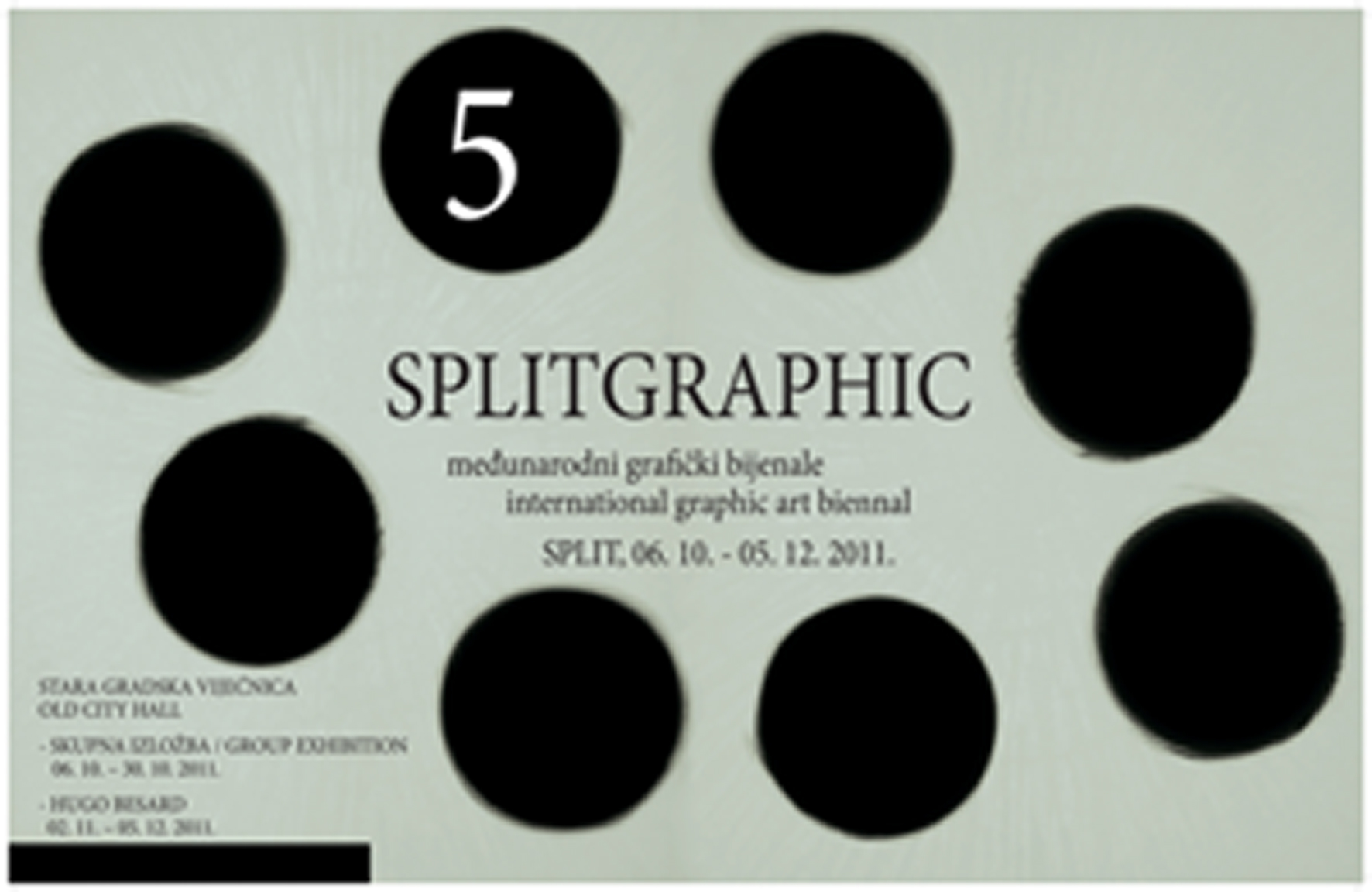
The fifth Splitgraphic Biennial in 2011, under the theme Dialogue with the Audience, introduced online submissions, an online exhibition of participating artists’ works, and a new Artists’ Award determined by votes from artists and visitors. The group exhibition attracted 205 submissions, from which an expert jury selected 60 artists. Belgian artist Hugo Besard, winner of the Grand Prix at the previous Biennial, was also presented in a solo exhibition.
2013–2014
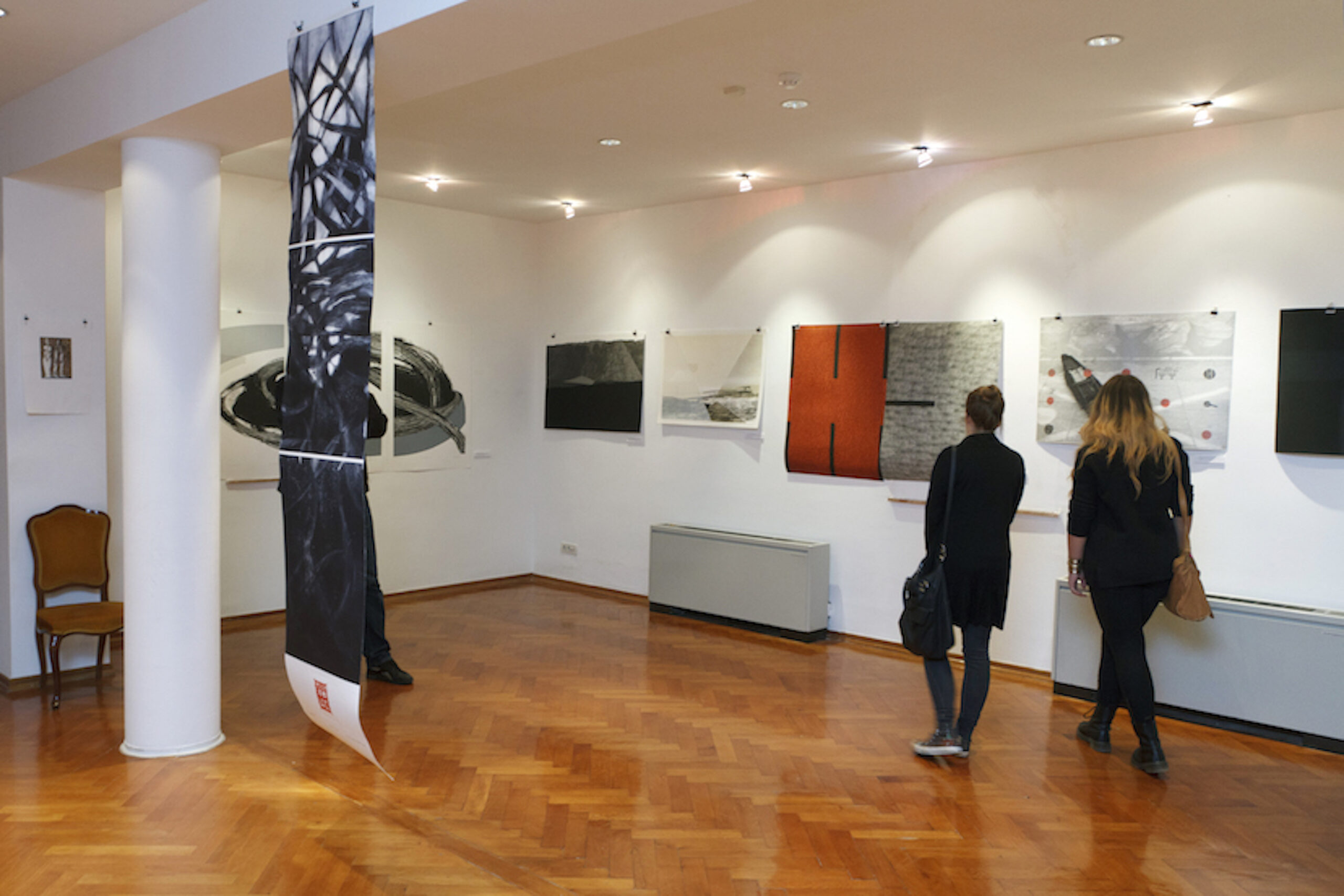
The sixth Splitgraphic Biennial took place between October and December 2013 under the theme Sustainability. It attracted a record 264 submissions from approximately 50 countries. Alongside the main group exhibition, a juried exhibition of student work was organised. A particular highlight was a solo exhibition by Belgian artist Ingrid Ledent, whose practice brought together lithography, digital printing and video installations in dialogue with the philosophy of Henri Bergson. The artist also delivered a lecture on the processes and ideas underlying her work.
Earlier that year, Splitgraphic organised The Graphic World of Hugo Besard at the Vladimir Bužančić Gallery in Zagreb, with the support of the Academy of Fine Arts in Zagreb and Professor Nevenka Arbanas.
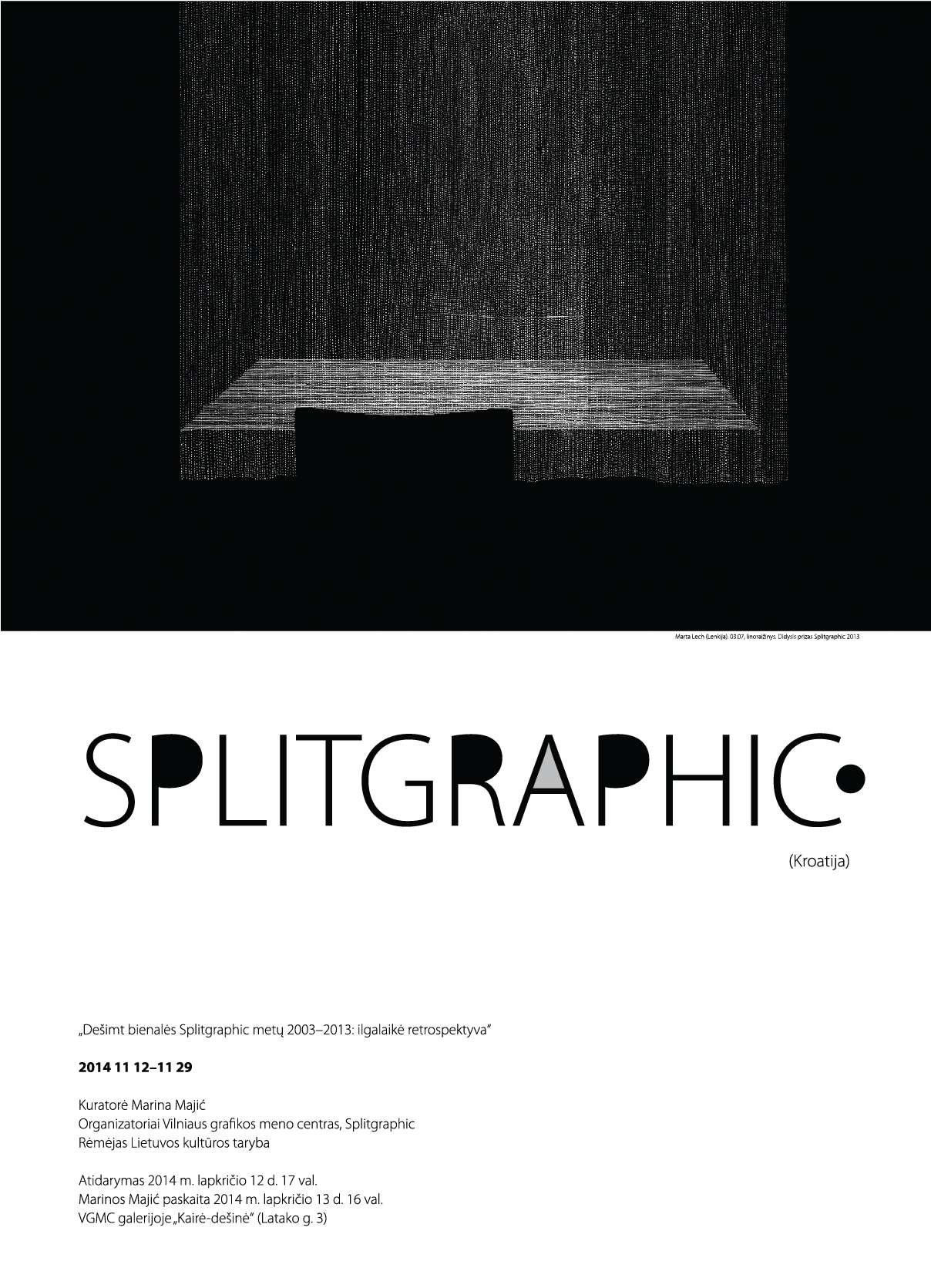
In November 2014, the Vilnius Graphic Art Centre in Lithuania hosted Ten Years of the Splitgraphic Biennial 2003–2013: A Sustainable Retrospective, presenting selected works and award-winning artists from the Biennial’s first decade.

2015–2016
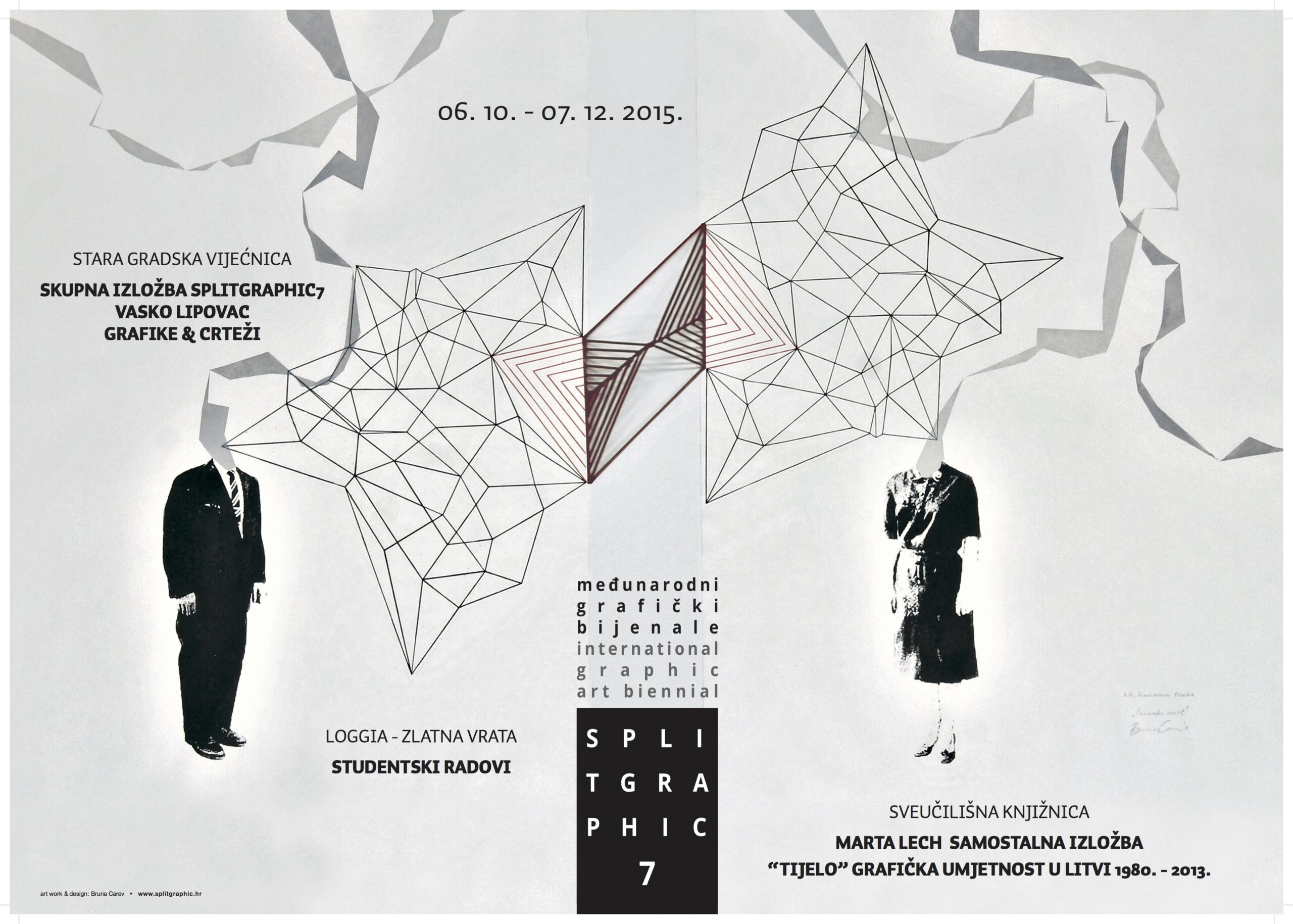
The seventh Splitgraphic Biennial in 2015, under the theme Printmaking as a Visual Language of Our Time, attracted 400 submissions from 55 countries. Alongside the main group exhibition, the programme featured Body: Graphic Art in Lithuania 1980–2013, organised in collaboration with the Vilnius Graphic Art Centre; Svjetlost / Light, a solo exhibition by Polish artist Marta Lech, winner of the 2013 Grand Prix; and an exhibition of prints and drawings by Vasko Lipovac, organised in collaboration with the Vasko Lipovac Atelier. That same year, Splitgraphic also participated in the International Print Triennial in Kraków.
One of Splitgraphic’s important aims was to maintain an active exhibition programme in the years between Biennials. In 2016, it organised Handwriting in Graphic Art at the Vilnius Graphic Art Centre, featuring Croatian women printmakers and curated by Marina Petit. Splitgraphic also participated in the international jury of the First Print Biennial in Łódź and organised exhibitions of contemporary Japanese printmaking and works by Polish artist Krzysztof Tomalski in Split.


2017–2018
The eighth Splitgraphic Biennial took place in 2017, with Ingrid Ledent serving as curator. Alongside the main group exhibition, the programme included a solo exhibition by Polish artist Wojciech Tylbor-Kubrakiewicz and a selection of student works. Splitgraphic also participated in the Guanlan International Print Biennial in Shenzhen, China.
International collaborations continued in 2018 with Young Lithuanian Printmaking, presented at Salon Galić in partnership with HULU-Split and the Vilnius Graphic Art Centre, as well as participation in FIG Bilbao, the international printmaking fair in Spain.

2019–2020
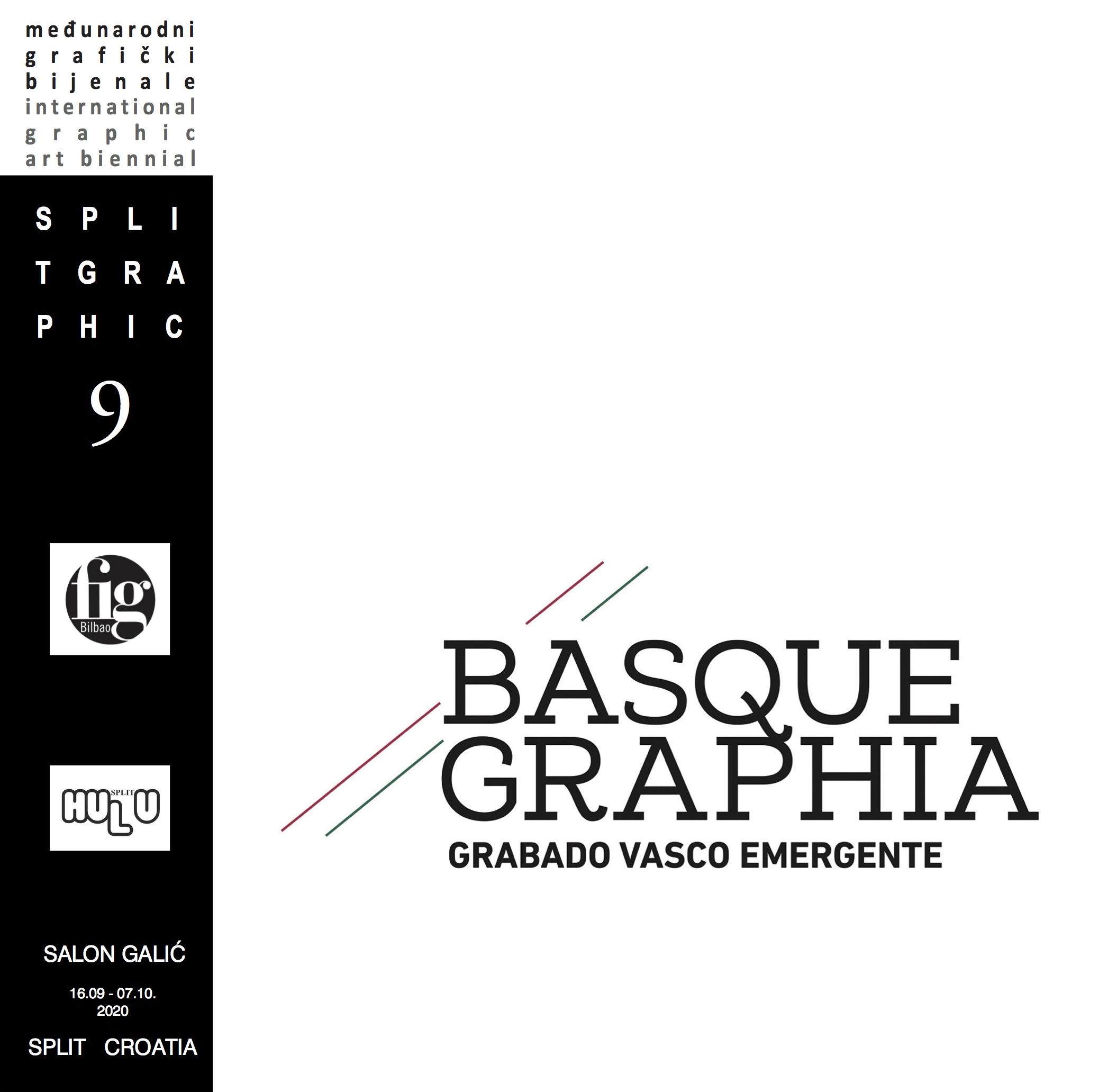
The ninth Splitgraphic Biennial was held across 2019 and 2020 in a modified format due to the renovation of the Old Town Hall and the pandemic. Its programme comprised a solo exhibition by Japanese artist Yoshio Imamura, winner of the 2017 Grand Prix, and Basquegraphia: New Basque Printmaking, a group exhibition featuring six contemporary Basque artists. Both exhibitions took place at Salon Galić in partnership with HULU-Split, with FIG Bilbao also collaborating on Basquegraphia. Marina Petit served as Splitgraphic’s curator.
2021–2022
The tenth Splitgraphic Biennial took place in October 2021 at the Old Town Hall in Split, with Ingrid Ledent and Yoshio Imamura serving as selectors. That same year, the Vilnius Graphic Art Centre hosted Geometry of Light, a solo exhibition by Marta Lech curated by Marina Petit.
In 2022, Salon Galić hosted Love-Relation Split, a solo exhibition by Japanese artist Masahiro Fukuda.


2026 and Beyond
Building on founder Pavo Majić’s vision of connecting artists and printmaking traditions across different cultural contexts, Splitgraphic is now extending its activities to include the research, preservation and presentation of its artistic and documentary heritage, alongside the development of new exhibition and research programmes.
Particular attention is being given to the history and future of printmaking, its place in the post-digital age, and new possibilities for its presentation and interpretation. Further international exhibitions and research collaborations are also in preparation.
Dialogue, one of Splitgraphic’s guiding principles since 2005, thus remains at the heart of its work: between artists and audiences, generations and cultural traditions, and between its artistic and documentary heritage and new ways of understanding and presenting it.